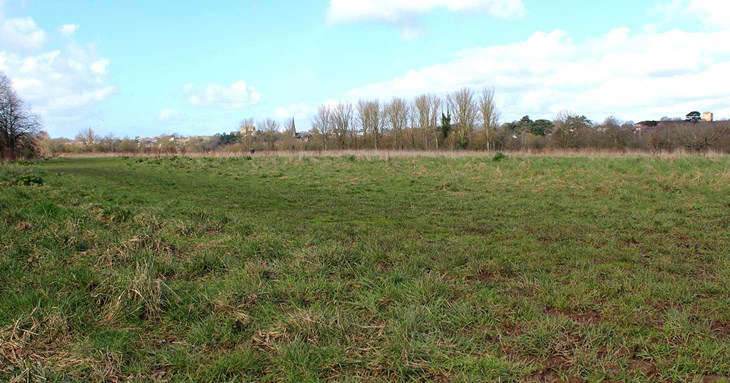
Grassy areas which will be allowed to grow to help wildlife and nature flourish in Sidmouth, will be signposted with paths maintained and created for everyone’s enjoyment.
Plans on how the Sid Valley’s green spaces will be managed, for the benefit of residents and nature, are being shared by East Devon District Council (EDDC) and Sidmouth Town Council (STC) in a bid to build public confidence.
In recent years, concerns over how grassy areas are maintained have been raised by some residents.
The majority of grass areas owned or managed by each council will be cut regularly in the growing season, and perhaps more frequently if growing conditions demand it.
The aim is for people to be able to enjoy activities, such as walking and relaxing on those green spaces, especially in and around the town and residential areas, as they are of important amenity and recreational value.
Other areas have been identified for nature across the Sid Valley and will be left to grow naturally between April and September each year to encourage grasses and wildflowers to flourish.
These areas, known as Wildlife Improvement Areas, will have appropriate signage to inform the public of their designation. In addition, each area will have strips mown next to paved or tarmacked areas so that plants on the edge do not interfere with use of the pathways or reduce visibility.
In some areas, additional paths will be cut to allow ease of passage and allow people to enjoy walking through areas designated for wildlife. Invasive species will also be managed, as necessary.
This sustainable practice will help enable wildlife to develop, establish vital habitats for insect pollinators and other wildlife, promote sustainable landscapes and encourage a wide variety of native wildflowers.
Many Wildlife Improvement Areas will sit alongside more managed amenity spaces. Those areas that have been identified for nature, either in part or completely are:
- Alma Lane Field
- Arcot Road Bank
- Bowd
- Brownlands
- Sid Road (opposite Questant lane)
- Delderfield Meadow
- Knapp Pond Nature Reserve
- Knowle Parkland (Part)
- Lymebourne (Part)
- Peak Hill (Part)
- Salter’s Meadow (Part)
- Stowford Rise (Part)
- The Byes Meadows (Part)
- Tyrell Mead (Part)
Further details are available on the
EDDC website - https://eastdevon.gov.uk/parks-gardens-and-recreation/parks-gardens-green-spaces/improving-green-spaces-for-wildlife/
or STC website - https://sidmouth.gov.uk/council-information/committees/environment/
 Cliff fall at Beer Beach
 Geologists called to survey Exeter landslip
 Fascinating 20th Century Exeter photos go on display
 East Devon creatives and culture organisations to receive new funding.
 Exeter collaboration scoops major award for safer stroke care
 Second Christmas Day swimmer identified
 Plan for 63 homes lands on controversial ‘hedge destruction’ site
 Have Your Say on Cranbrook’s New Leisure & Wellbeing Centre