
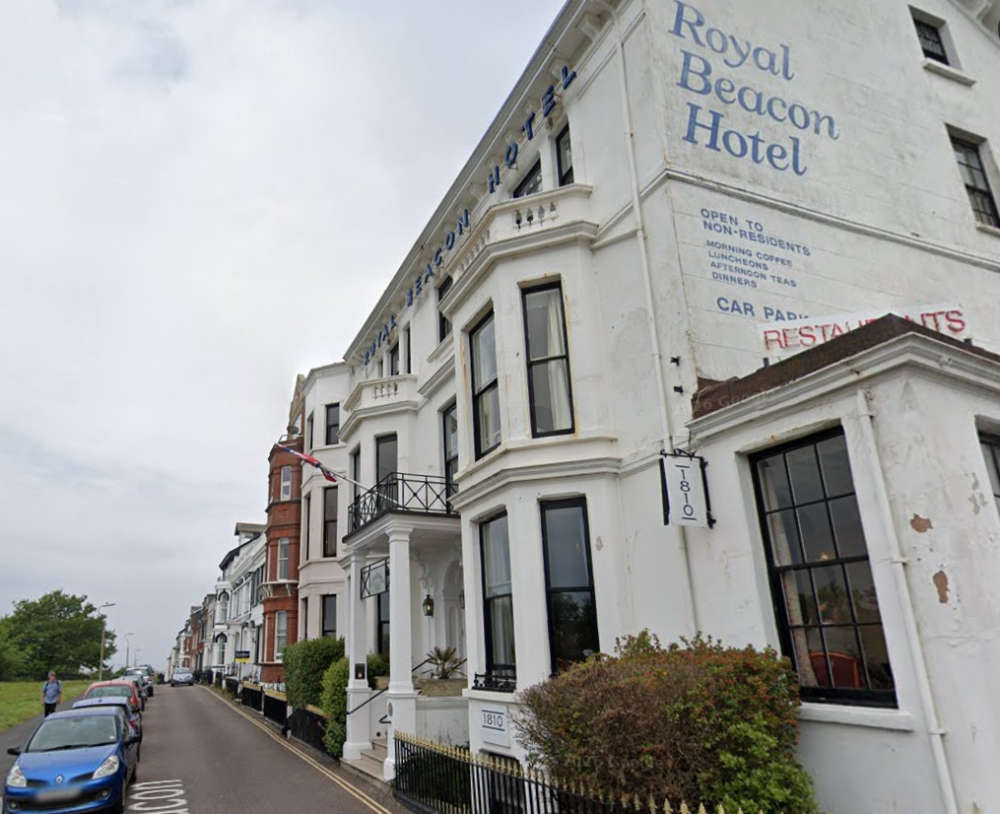
A quintessential hotel that harks back to a Devon seaside town’s heritage will be turned into apartments after planners approved an overhaul.
The Royal Beacon Hotel, in Exmouth, is a Grade II listed building that would have been a high-status destination during some of the town’s previous tourism peaks, including through the 1800s and 1900s.
Plans to turn the hotel into 19 apartments and to build two new-build mews houses at the rear of the property courted some controversy, with the town council and several residents vocalising opposition.
But the scheme, submitted by Keith Richardson, of Richardson Hotels, provided evidence to the council that the hotel is “no longer commercially viable”, which made it acceptable in planning terms to turn it into homes.
At East Devon District Council’s planning committee, resident Anne Killoran described the proposals as “gross overdevelopment”.
“It is another example of a planning application for too many units,” she said.
“The planning application states the new builds are supposed to represent an enhancement to the character and appearance of the site and the wider conservation area, but I really fail to see how two, three-storey new builds with garages enhance the character of the site when they will be opposite a row of cottages built in the late 1800s.”
Ms Killoran also raised fears about parking issues, claiming not enough parking would be provided.
However, the hotel has just six spaces now for staff and visitors, and planners said the proposed one space per dwelling would “represent a significant improvement”.
The town’s mayor, Graham Deasy, also spoke out against the plans.
“While we recognise the Royal Beacon requires significant investment, and we welcome the restoration of the important Grade II listed building and the public benefit this brings, this application comes at considerable cost,” he said.
“If we permanently remove one of Exmouth’s long-established hotels from the town, and change it to apartments, we have lost it for tourism forever, and that permanent loss matters as visitor accommodation is vital and every reduction weakens our ability to support future tourism.”
But Councillor Olly Davey (Green Party, Exmouth Town), felt the hotel’s challenges meant the plans were acceptable.
“We’re not losing something that isn’t being used already,,” he said.
“And when you look at other similar hotels, like The Imperial and The Devoncourt, they’ve suffered similar issues and all the large hotels are struggling.
“So, I think we should take what we’re being given [with this plan].”
Chair Councillor Eileen Wragg (Liberal Democrat, Exmouth Town) agreed it was sad to lose the hotel, but noted a change in demands from tourists.
“It is very sad to see the demise of the hotel as it has a lot of history but holiday trends are changing, and at one time, the focal point of a holiday was the hotel, and you’d dress up for dinner, but times have changed,” she said, noting that the likes of Airbnb properties had increasingly grown in popularity.
The committee passed the plans with five in favour and two abstentions.
 Police welcome new students
 Appeal for witnesses after serious A30 collision near Yarcombe
 Sewage spill in Exmouth renews focus on resilience
 Devon Truck Show gets a green light for 2027 in spite of concerns
 Anger over ‘secret’ body that decides on speed limit reductions
 Chief Constable to lead police force for a further two years
 New figures highlight ongoing Meningitis B risk for students
 Police warn drivers to plan ahead and not be tempted to drink and drive
 Devon council seeks further clarification from government before taking a decision to issue proceedings
 Walk this way as Exeter prepares for first ever walking festival
 Connect to Work presents free online sessions on inclusive employment
 Projected £88m special needs overspend highlights bailout urgency
 Quarry dust pressure leads to monitoring pledge
 Manipulative and violent man jailed for terrifying attacks on women
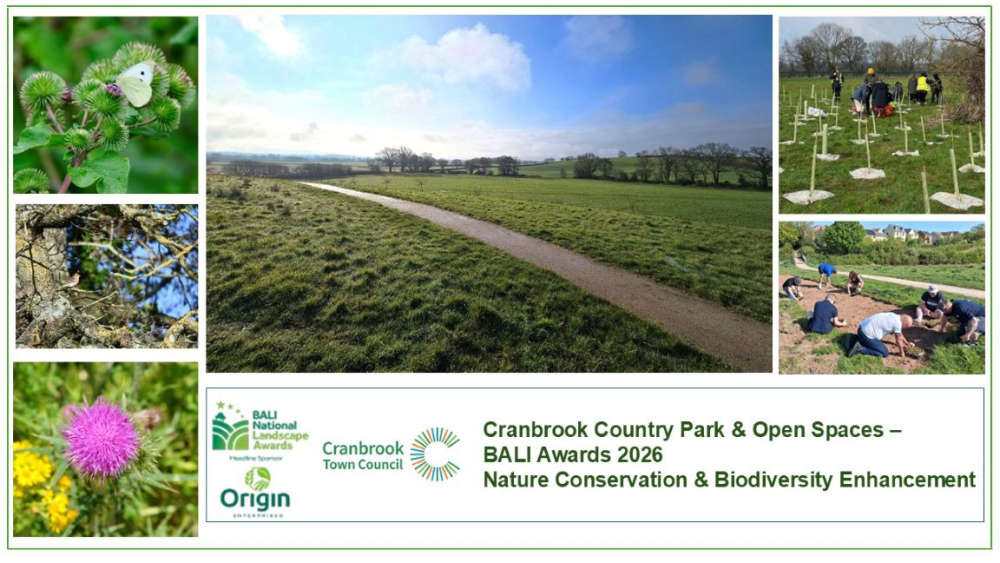 Cranbrook Country Park Wins BALI Award for Nature Conservation & Biodiversity Enhancement
 South West communities asked to help shape energy future